Archive for the ‘Cataracts’ Category

The Light-Adjustable Lens: Using the Power of Light to Improve Vision

Saturday, February 15th, 2025
https://www.shutterstock.com/image-photo/photo-intra-ocular-lens-iol-treating-2309983601

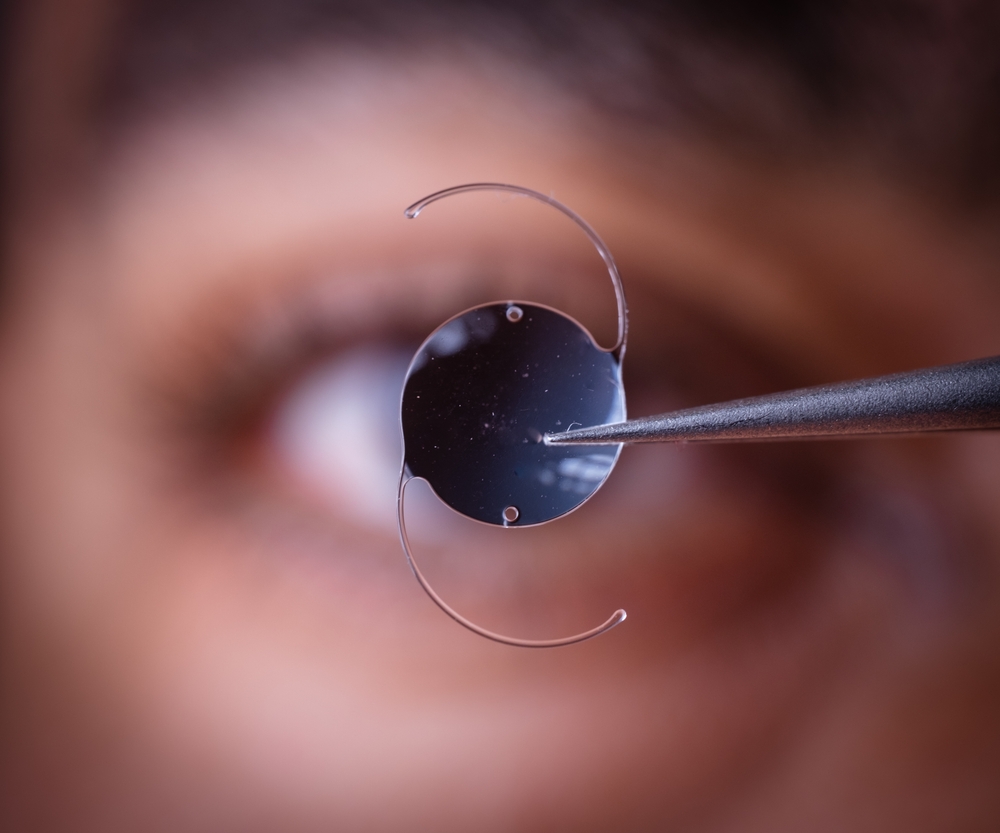
If you have cataracts and always assumed that vision correction was set in stone after surgery, we’ve got great news: the revolutionary Light Adjustable Lens is changing the world of cataract surgery today. It allows for eyesight adjustments weeks after the procedure, with trial sessions to ensure it’s just right before locking in the correction. 

At Bochner Eye Institute, one of Canada’s first eye care centers to offer this innovative technology, Dr. Raymond Stein makes achieving your best possible vision easy. Celebrities, F1 drivers, NASA test pilots, and countless people trust us with their eyesight. 

Now, you, too, can experience customized vision improvement tailored precisely to your needs with the Light Adjustable Lens. Here’s what you should know about this customizable surgery option.

How the Light Adjustable Lens Works

The Light Adjustable Lens (LAL) is a state-of-the-art intraocular lens (IOL) that provides optimal visual accuracy after cataract surgery. It’s also an option for refractive lens exchange (RLE) in which patients with significant nearsightedness or farsightedness need vision correction but don’t have cataracts yet.

The LAL is approved by the Canadian Health Protection Branch and the United States FDA. It’s the only lens of its kind because it allows you to fine-tune your IOL prescription after surgery. 

LALs feature a unique photosensitive material that responds to ultraviolet (UV) light. After surgery, you’ll have a healing period followed by several brief treatment sessions to fine-tune your vision. 

In contrast, other IOLs are set: After surgery, you can’t adjust your vision, so the LAL represents a remarkable advancement in vision correction. 

What to Expect After Your Procedure

After surgery, you’ll wear special UV-blocking glasses to protect your eyes from unintended exposure. These glasses prevent accidental changes in your lens while adjustments are ongoing. You’ll wear them for approximately four to six weeks, removing them only briefly for activities like showering or sleeping. 

Around 21-30 days after surgery, Dr. Stein uses a specialized light delivery device to direct UV light on the lens. This process adjusts the power of your lens, changing it based on your initial feedback. 

This painless process only takes about 90 seconds. Most patients have between three and five adjustment sessions. Once you’re happy with your vision, a final “lock-in” treatment ensures your customized results are permanent.

Advantages of Choosing the Light-Adjustable Lens

The LAL is about twice as likely to give you 20/20 vision without glasses versus standard IOLs. 

The ability to preview and adjust your vision post-surgery offers many patients peace of mind before they undergo cataract surgery or RLE. 

Overall, the LAL has long-term visual satisfaction and flexibility unmatched by other lens options.

LAL in Toronto, Scarborough, Unionville, and Oakville, ON

With nearly a century of innovation, the Bochner Eye Institute is a trailblazer in advanced vision correction. Dr. Raymond Stein and our specialists guide you through each step, ensuring your comfort and optimal vision outcomes. If you’re ready to experience the freedom of customized vision, contact Dr. Stein’s office at Bochner Eye Institute today at 416-960-2020

Understanding the Different Types of Cataracts

Monday, February 15th, 2021

When cataracts develop, images progressively become duller and hazier. Colors fade and vision slowly dims. These effects have real consequences for the quality of life and safety of individuals whose cataracts have become advanced.

Although the effects are the same, the types of cataracts that precipitate this visual decline vary. Here, experienced Toronto ophthalmologist Dr. Raymond Stein of Bochner Eye Institute reviews the fundamental causes and effects.

Classifying Cataracts

Cataracts occur when the lens becomes cloudy, obscuring the image it projects on the retina. This process can begin in our 60s, and becomes more common with each passing year.

The most common type of cataract follows this age-related pattern, and is referred to as a nuclear sclerotic cataract. With this variety of cataract, the central part of the lens (nucleus) hardens and gradually becomes yellow or brown. Cortical cataracts, by contrast, form around the edges of the lens nucleus. When the clouding begins at the back of the lens, the result is a posterior capsular cataract.

Congenital cataracts are less common, and are usually detected during a child’s first year. Medications or diseases such as glaucoma and diabetes can cause a type of cataracts referred to as secondary cataracts. Injury to the eye sometimes results in traumatic cataracts, which may appear years after the initial impact or injury. Radiation cataracts can develop in cancer patients who are receiving radiation treatment.

A Proven Solution

In each case, the solution is the same: cataract surgery, a simple, convenient and routine procedure. Millions of cataract surgeries are performed each year. In this procedure, the clouded lens is removed and replaced with a lens implant that will remain clear for life. Originally performed with the use of a miniature blade, cataract removal is now done using a femtosecond laser to make incisions.

As a premier eye surgeon, Dr. Stein performs advanced cataract surgical procedures for patients in Toronto and throughout Ontario. He also offers state-of-the-art intraocular lenses that will replace your natural lens with a permanent, resilient artificial version that, depending on your choice, can give you superb vision at a variety of distances.

To learn more about cataracts, please call or email Bochner Eye Institute today.

What Is Life Like With Cataracts?

Wednesday, September 30th, 2020

Cataracts are a nearly unavoidable part of getting older. A cataract is a clouding of the eye’s lens that occurs when the proteins that make up the lens clump together. In the early stages of a cataract, it may have little effect on vision. But as a cataract progresses, the visual effects will become nearly impossible to ignore.

Read on as Dr. Raymond Stein of Bochner Eye Institute explains what life is like with cataracts.

Declining Ability To Read Small Text

Cataracts cause blurry or cloudy vision, which makes it hard to see fine details. In the early stages of a cataract, a person may notice he or she needs brighter light to read a newspaper or magazine. But as the cataract gets bigger, it may be challenging to read small text no matter how bright the room is. A decline in the ability to read fine print can impact many basic tasks, such as checking the time, reading an expiration date, typing out a text or using a computer.

Difficulty Driving at Night

A decline in night vision is common with cataracts. Glare, halos and starbursts around lights can interfere with reading road signs or noticing other cars or pedestrians. In fact, some people with cataracts opt not to drive at night at all because of concerns about safety.

Colors Appear Dull or Faded

Cataracts can cause colors to appear dull, faded or yellowish. This may make getting dressed or discerning between ripe or rotten produce tough.

Frequent Changes in Vision Prescription

When the effects of cataracts first become apparent, a person may assume he or she needs stronger glasses. But after repeated prescription changes in a relatively short amount of time, it may become apparent that cataracts — not the glasses — are the problem.

Inability To Enjoy Hobbies or Exercise

Because of blurry vision, dull or faded colors and other effects of cataracts, some people lose their ability to enjoy hobbies and exercise. Cooking, baking, golfing or even taking a leisurely walk outside is less pleasurable when faced with the symptoms of cataracts. Hobbies like sewing, photography and fishing can actually become more of a burden than a joy with diminished vision.

Improve Vision With Cataract Surgery

Are cataracts interfering with your ability to live an active, independent lifestyle? Cataract surgery can help. The procedure is extremely safe and routine, with a high success rate. Your eyes will be completely numbed and you will receive additional medication to help you relax during the procedure. Your clouded lens will be removed and replaced with an artificial lens to restore clear vision and even improve upon the vision you had before cataracts. Thanks to cataract surgery, you can look forward to reading, driving, exercising and enjoying your favorite hobbies again, without relying on loved ones for help.

To speak with Dr. Stein and the team at Bochner Eye Institute about cataract surgery, please contact us today.

Cloudy Vision after Cataracts

Tuesday, April 23rd, 2019

Blurred Vision after Cataract SurgeryA common question that Dr. Raymond Stein of Bochner Eye Institute receives from cataract surgery patients is whether cataracts can “grow back” after surgery. Cataracts cannot, in fact, grow back after surgery. Once they are removed, they are gone for good.

However, in rare cases, patients who have their vision restored with cataract surgery may notice a regression in their eyesight that is similar to what they experienced with cataracts. This decline is due to a condition known as secondary cataracts; and luckily, it is easily treated. (more…)