What is the Perfect Age for LASIK or PRK?

September 3rd, 2022

While there is no perfect age for laser vision correction with LASIK or PRK, some age groups are less likely to qualify for the procedure for several reasons related to eye development and health. Our eye surgeon, Dr. Raymond Stein, in Toronto, will discuss your eye health, vision prescription and medical history during your eye exam. He will recommend the vision correction options to help you eliminate glasses and contacts. 

Many eye surgeons prefer LASIK patients in the 25 to 40 age range because they’re more likely to have stable prescriptions and aren’t at risk for age-related eye diseases and vision changes. 

Read the rest of this entry »

3 Tips for Choosing Your LASIK Eye Surgeon

March 6th, 2022

While deciding to have laser vision correction is a big decision, choosing your eye surgeon is the most important part of the process. You rely on your eyes for virtually every task throughout your life. Therefore, you need a LASIK eye surgeon with the experience and skill to improve your vision safely and effectively. Your chosen surgeon is directly responsible for your LASIK results and handling any post-operative concerns. 

Other staff may assist the LASIK surgeon during your procedure. However, the surgeon is in charge of all aspects of the process, including determining if LASIK is the right option for you and confirming the measurements that guide the laser during the procedure. The surgeon is also the one who will provide follow-up care and handle your questions and concerns. 

Read the rest of this entry »

How to Prevent Screens from Affecting Your Ocular Health

October 7th, 2021

The average worker spends seven hours a day on the computer for work purposes. In many cases, one or more of these hours is spent on a smartphone or tablet. Screens are so engrained in our society that there is an umbrella term for eye issues caused by excessive exposure.

Computer vision syndrome involves two main concerns for people who spend most of their days in front of a screen: dry eyes and eyestrain. Dr. Raymond Stein and our eye doctors at Bochner Eye Institute explain what causes these screen issues and how to prevent them.

Dry Eyes Caused by Screen Use 

Whether you work with images or text, your eyes are overwhelmed by the stimulating screen in front of you, and you forget to blink. The average blinking rate goes from 15 times per minute to just five to seven during computer usage. Your eye’s surface depends on a thin layer of liquid to protect it that is replenished by blinking. A lower blinking rate leads to dry eyes.  

Digital Eye Strain 

There could be a few culprits behind digital eye strain — one being the glare or brightness emanating from the screen, and the other that your prescription is out of date. People who don’t use reading glasses when they need them or need a new contact lens or glasses prescription have a harder time focusing on the text or images on a screen. Research suggests this is because the screen uses pixels with blurry edges unlike a piece of paper or book with defined print. 

Tips to Prevent Computer Vision Syndrome 

Computer vision syndrome symptoms may involve headaches, eyestrain, blurred vision, dry eyes and neck and shoulder pain. These concerns are often caused by a combination of issues associated with long-term computer use, such as poor lighting, inadequate viewing distance and uncorrected vision. Luckily, the symptoms are temporary, and there are several ways to alleviate and prevent computer vision syndrome including: 

  • Regular eye exams to adjust your prescription if necessary and look for early signs of eye disease. 
  • Sit two feet away from the computer screen.
  • Center the computer monitor lower than your eye level, approximately 20 degrees from the center of the screen. 
  • Use a screen filter to decrease the glare on your computer, smartphone or tablet.
  • Adjust the settings for a larger font to reduce eye strain. 
  • Switch your office light bulbs out for softer, low-wattage bulbs to help screen glare. 
  • Use the 20/20/20 Rule: Every 20 minutes, take a 20-second break to look at something 20 feet away.
  • Rest your eyes for 15 minutes for every two hours of computer use.
  • Use glasses with special tints to reduce screen glare and blue light exposure. 
  • Talk to our eye doctors about eye drops and other options for computer vision syndrome.

Schedule an Eye Exam 

If you’re experiencing signs of computer vision syndrome, call or email our team at Bochner Eye Institute in Toronto to schedule your eye exam today.

Bochner Eye Institute Named Official Partner of the Toronto Maple Leafs

June 10th, 2021

Dr. Raymond Stein is pleased to announce that Bochner Eye Institute is an official partner of the Toronto Maple Leafs. Dr. Stein and his colleagues are proud to personally handle any laser vision correction or ophthalmological needs for the Maple Leafs and show them the exceptional care patients have come to expect from him. Bochner Eye Institute has worked with other professional sports teams, including the Toronto Blue Jays and the Toronto Marlies.

The Benefits of Laser Vision Correction for Professional Athletes

Athletes and laser vision correction are a natural fit. Athletes have always needed clear, detailed vision to excel in their sport. Hockey players in particular require great hand-eye coordination — especially when a puck can reach speeds of over 100mph and players can move across the ice at speeds of up to 30mph.

But glasses and contact lenses are an imperfect vision solution for athletes, as they can be uncomfortable and inconvenient. Professional players do not have the time to spend wiping off their glasses or adjusting a dislodged contact lens in the middle of a practice or game. Sports goggles are effective but do not always provide good peripheral vision. There are also some safety concerns with corrective eyewear; for example, moving at high speeds with cloudy glasses or goggles can be risky, or dirt and sweat can get trapped under contact lenses, possibly causing infection.

Laser vision correction provides the clear, independent vision athletes need to focus on their performance (not their visual aids) and gain a performance-boosting edge. Today’s laser eye procedures are quick, extremely precise and require minimal recovery downtime. The majority of players are able to hit the ice or the field quickly after surgery, with dramatically improved vision and no need for contacts or glasses.

Bochner Eye Institute’s History of Excellence

Bochner Eye Institute has been a leader in eye care since the center’s inception in 1929. Not only do the eye surgeons at Bochner Eye Institute help countless patients enjoy clearer sight, they also make regular, valuable contributions to further the ophthalmology profession.

Dr. Stein, the medical director of Bochner Eye Institute, is well-known for pioneering new technologies and techniques to treat refractive errors as well as other eye diseases such as keratoconus and age-related macular degeneration. He has traveled internationally to train other ophthalmologists and present at refractive surgery meetings about the technology he uses and the results he has achieved. Dr. Stein has also published a large volume of articles and books about his areas of interest.

To learn more about Bochner Eye Institute’s legacy or any of the services we offer, please visit www.bochner.com today.

Meet the New Professor of Ophthalmology & Vision Sciences at U of T

May 24th, 2021
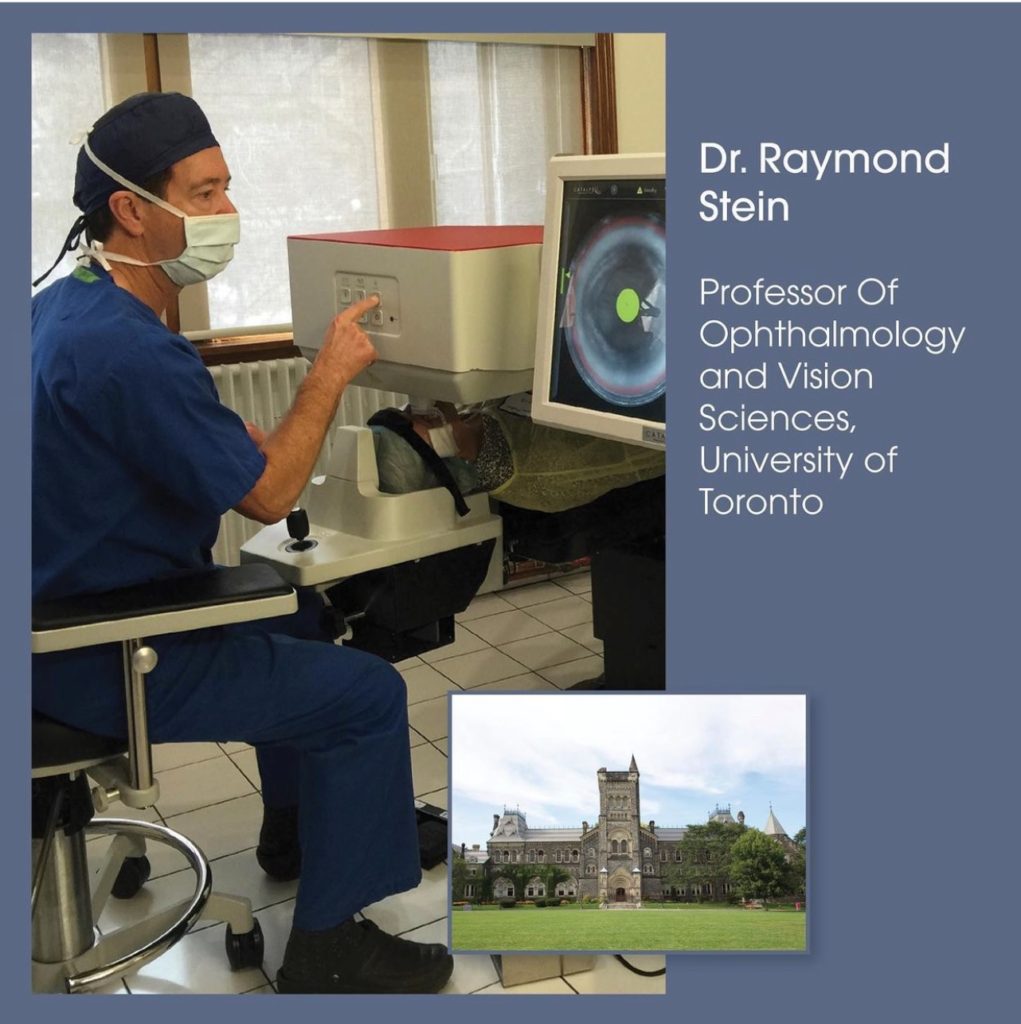
Dr. Raymond Stein, Professor of Ophthalmology and Vision Sciences at the University of Toronto

We are thrilled to announce that Dr. Raymond Stein, was promoted to Professor of Ophthalmology and Vision Sciences at the University of Toronto. This is the highest designation at the University in recognition of having an international impact and scholarly activities. Dr. Stein’s accomplishments include writing scientific articles, books, chapters, as well as presentations and seminars to students and other doctors. Over 30 professors of ophthalmology from around the world wrote letters of support for this promotion. Congratulations on this remarkable achievement Dr. Raymond Stein, of Bochner Eye Institute.

What Does LASIK Feel Like?

May 5th, 2021
Top Choice in Toronto for LASIK

For prospective patients who are worried about the pain of a LASIK procedure, the good news is that there isn’t any. The state-of-the-art fraxel laser used by skilled Toronto area ophthalmologist Dr. Raymond Stein is in touch with the cornea for 40 seconds or less, and its concentrated energy is cool to the touch.

Top Doctor, Superior Comfort

Dr. Stein has performed thousands of laser vision correction surgeries, and is a recognized pioneer in the field — teaching, publishing and innovating on all aspects of the procedure. He magnifies the comfort of the experience by discussing each element of the surgery in depth, answering every question and working to understand the goals and expectations of each patient.

It’s no surprise that LASIK vision correction at Bochner Eye Institute would be a thoroughly comfortable and satisfying experience. After all, Dr. Stein’s practice was named Toronto’s Top Choice Winner for Laser Vision Correction this year. That adds an extra layer of reassurance to an already discomfort-free procedure.

Blade-Free Precision

Your first clue that there is nothing to fear from LASIK is that there is absolutely no blade involved. In addition, a local anesthetic will ensure maximum comfort as the precise fraxel laser briefly reshapes the cornea. There may be a mild sensation of pressure, and a short-lived blurring and dimming of vision. Patients often compare the short session to the experience of a typical contact lens fitting.

Quick Recovery

Any discomfort you notice won’t be in the surgical chair, but in the hours after a procedure. Very mild discomfort is common during recovery, but healing happens quickly, with your vision coming into focus with new clarity within a day.

Temporary sensations may include itchiness, warmth or a feeling of some debris in the eye. In the end, the most uncomfortable aspect of these minor side effects is that you must refrain from rubbing your eyes in response. This can take some self-control, but it is one of the keys to successful, complication-free healing.

To schedule an appointment to discuss LASIK with premier Toronto area ophthalmologist Dr. Raymond Stein, please call or email Bochner Eye Institute today.

What Makes Someone a Good Candidate for LASIK?

April 4th, 2021
LASIK vision correction in Toronto

Most of us make decisions by weighing pros and cons. That’s what makes the decision to try LASIK vision correction so straightforward — there simply aren’t very many downsides to consider.

Your decision will depend mostly on your own personal preferences, as there are few limiting factors that would make LASIK impractical for the average adult. Here, experienced Toronto area ophthalmologist Dr. Raymond Stein offers his perspective on the key benefits of LASIK, and whether this remarkable technology is right for you.

New Freedom

If you’ve ever imagined life without lenses, you are probably a good candidate for LASIK. Laser vision correction gives you freedom from the bulky frames that may have limited your choices of sporting activities and lowered your confidence in social situations. It also frees up the time you spent on the care, disinfection and replacement of contact lenses; and eliminates the discomfort you may have occasionally felt with them.

LASIK works by reshaping your cornea, and thereby adjusting the way light focuses on your retina. Over time your cornea can change shape, or you may have been born with a corneal imperfection. This can result in nearsightedness, farsightedness or astigmatism. By restoring optimal contours to your cornea, the advanced LASIK instrument refocuses your eyesight, adding new sharpness, vibrancy and detail to the world around you.

Making the Choice

Although any time is a great time for clear vision, the best outcomes can be expected in patients whose eyes have fully matured. This usually happens some time before our late 20s. Choosing LASIK at this point will help ensure that your results are permanent and your surgery will never need to be redone.

Apart from age, there are very few factors that could rule out LASIK for most patients. If you were born with corneas that are very thin, you may not be a good candidate for LASIK. That is because there may not be enough corneal surface for a surgeon to work with when cutting and reshaping the cornea with the surgical laser. Patients in this specific group may still achieve wonderful results with PRK, a similar vision correction procedure. PRK may also be the better choice for patients who had earlier eye surgeries, including cataract removal, refractive lens exchange (RLE) or radial keratotomy.

To schedule an appointment to discuss LASIK with premier Toronto area ophthalmologist Dr. Raymond Stein, please call or email Bochner Eye Institute today.

This Year’s Top Choice Winner for Laser Vision Correction

March 4th, 2021

Top Choice in Toronto for LASIKDr. Raymond Stein and his team are pleased to announce that Bochner Eye Institute is Toronto’s 2021 Top Choice Winner for Laser Vision Correction. The recognition honors “consistent excellence in the pursuit of customer satisfaction.”

The award is based on surveys of hundreds of customers and members of the community. Their experiences are used to quantify “the trust and loyalty [businesses] have earned from the people they serve.” Winners display the proprietary Mark of Excellence and are listed in the iTrustLocal.com directory.

Dr. Stein is gratified that clients prize his depth of experience, the convenience and value of the laser vision correction procedures he offers, the extraordinary precision of his LASIK surgical technique and also the satisfying customer experience. This includes the friendliness of the staff, the transparency and integrity of the Institute’s core values and the personalized attention every patient receives.

Trust a Top Surgeon

As a trusted Toronto ophthalmologist, Dr. Stein’s commitment to our city and its communities runs deep. A graduate of the University of Toronto Medical School, Dr. Stein also served as Chief Ophthalmologist at the Scarborough Hospital and is currently Associate Professor of Ophthalmology at the University of Toronto. Although his reputation transcends the community, he always puts local patients first, providing advanced care and the most sophisticated surgical procedures to the families of our city.

A former president of the Canadian Society of Cataract and Refractive Surgery, Dr. Stein is a prolific author, popular lecturer and recognized innovator. He is also the current editor of Clinical and Surgical Ophthalmology, a highly respected medical journal. His years of training include an ophthalmology residency at the Mayo Clinic and a cornea and external diseases fellowship at the Wills Eye Hospital in Philadelphia.

He estimates he has performed nearly a quarter million surgical procedures to date, including cataract surgery, refractive lens exchange, LASIK and PRK. He is equally adept at routine vision correction procedures and complex cases involving keratoconus and loss of eyesight.

To schedule an appointment with experienced Toronto ophthalmologist Dr. Raymond Stein, please call or email Bochner Eye Institute today.

Common Habits That Could Harm Your Eyes

February 28th, 2021

Preserving the health of your eyes is not just simple — it’s essential to the clarity of your sight and ultimately your enjoyment of life. By adopting a small number of key lifestyle choices and habits, you can help protect your eyes and ensure a lifetime of clear, vivid and panoramic vision.

Here, experienced Toronto ophthalmologist Dr. Raymond Stein of Bochner Eye Institute outlines the best strategies for supporting optimal eye health.

Ultraviolet Rays

Sunglasses are an important way to protect your eyes, and not just on sunny days: Harmful ultraviolet rays easily pass through clouds and reflect off water and light-colored surfaces. Quality sunglasses with high levels of UVA and UVB protection are essential to preventing damage to your eyes and the development of conditions such as cataracts and macular degeneration. 

Digital Screens

Damaging ultraviolet rays are at the far blue end of the electromagnetic spectrum, but you can get an unhealthy dose of blue light even when you’re out of the sun. Computer screens and other digital devices emit blue light, as do high-definition TVs and the LED lights that are steadily replacing the old incandescent bulbs. Using a screen filter, special glasses designed for computer use, and simply limiting your screen time, are all smart ways to protect your eyes and reduce strain.

Contact Lens Habits

If you wear contact lenses, keeping them free of bacteria should be a priority. When bacteria develop on lenses or in lens containers that haven’t been properly cleaned or replaced, the results can range from irritation to serious infection. And some types of eye infection can lead to loss of vision.

Rubbing Your Eyes

Because the eye is so fragile, even a moderate amount of rubbing can result in damage. When rubbing causes small blood vessels to break, the eyes appear bloodshot. Leakage from capillaries can even create dark circles under the eyes.

In the process of rubbing the eyes, your hand may transfer germs to the area, which can cause conjunctivitis or other infections. If there is dirt, debris or a grain of sand in the eye, it can scratch the cornea when you rub your eyes. The effect is even greater if you wear contact lenses.

Too much rubbing can affect your vision, changing your prescription by shortening or lengthening the distance between lens and retina. It can also cause an increase in intraocular eye pressure, which is especially dangerous for those already suffering from elevated eye pressure.

To learn more about ways to preserve the health of your eyes, please call or email Bochner Eye Institute today.
Understanding the Different Types of Cataracts

February 15th, 2021

When cataracts develop, images progressively become duller and hazier. Colors fade and vision slowly dims. These effects have real consequences for the quality of life and safety of individuals whose cataracts have become advanced.

Although the effects are the same, the types of cataracts that precipitate this visual decline vary. Here, experienced Toronto ophthalmologist Dr. Raymond Stein of Bochner Eye Institute reviews the fundamental causes and effects.

Classifying Cataracts

Cataracts occur when the lens becomes cloudy, obscuring the image it projects on the retina. This process can begin in our 60s, and becomes more common with each passing year.

The most common type of cataract follows this age-related pattern, and is referred to as a nuclear sclerotic cataract. With this variety of cataract, the central part of the lens (nucleus) hardens and gradually becomes yellow or brown. Cortical cataracts, by contrast, form around the edges of the lens nucleus. When the clouding begins at the back of the lens, the result is a posterior capsular cataract.

Congenital cataracts are less common, and are usually detected during a child’s first year. Medications or diseases such as glaucoma and diabetes can cause a type of cataracts referred to as secondary cataracts. Injury to the eye sometimes results in traumatic cataracts, which may appear years after the initial impact or injury. Radiation cataracts can develop in cancer patients who are receiving radiation treatment.

A Proven Solution

In each case, the solution is the same: cataract surgery, a simple, convenient and routine procedure. Millions of cataract surgeries are performed each year. In this procedure, the clouded lens is removed and replaced with a lens implant that will remain clear for life. Originally performed with the use of a miniature blade, cataract removal is now done using a femtosecond laser to make incisions.

As a premier eye surgeon, Dr. Stein performs advanced cataract surgical procedures for patients in Toronto and throughout Ontario. He also offers state-of-the-art intraocular lenses that will replace your natural lens with a permanent, resilient artificial version that, depending on your choice, can give you superb vision at a variety of distances.

To learn more about cataracts, please call or email Bochner Eye Institute today.